

12 Years of History, Bound into a Single BookLooking Back on the Production of Document of Ginza Sony Park Project (Part 1)

Aug 25, 2026

Introduction

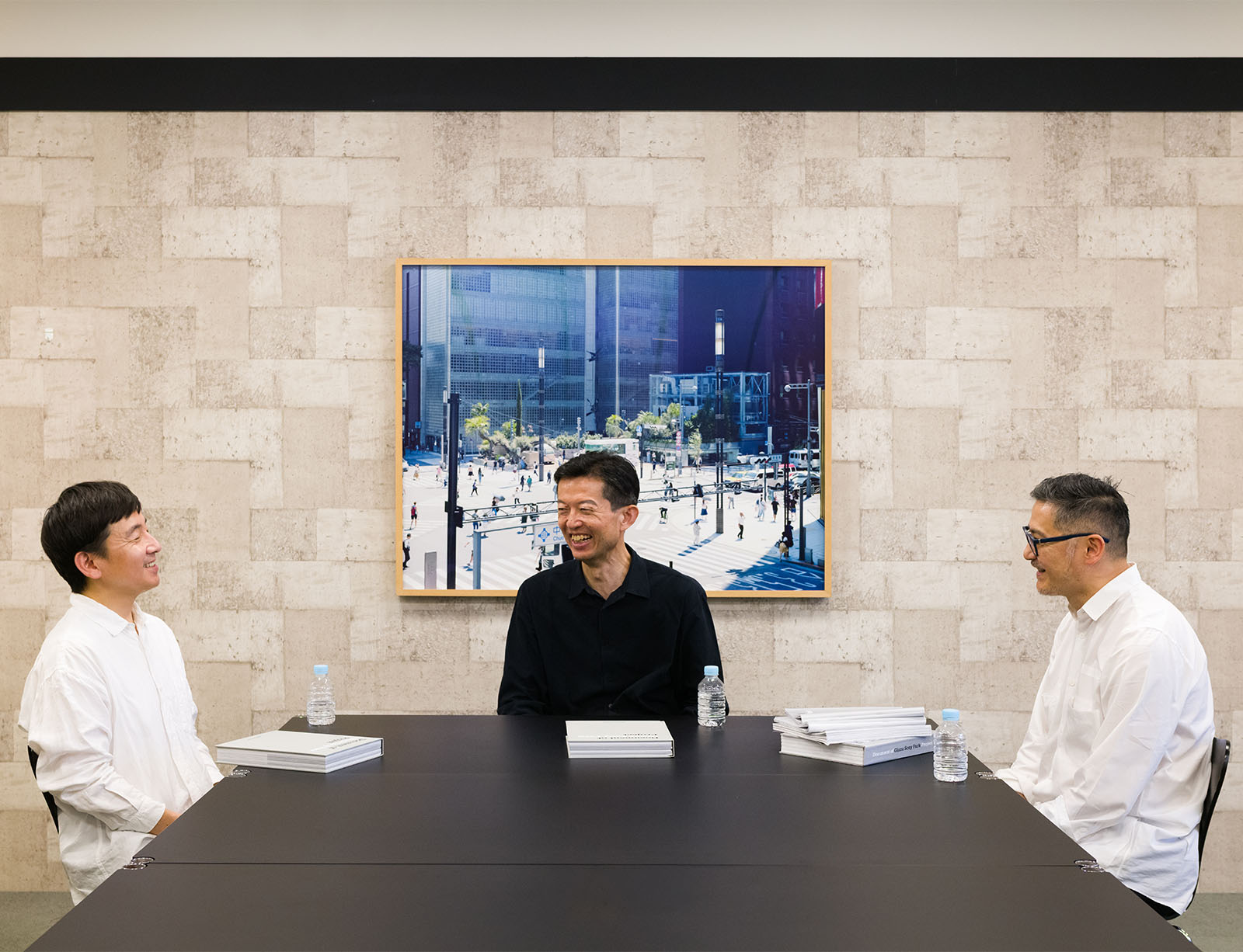
Three men sit against a wood-paneled wall with a large photo of the Ginza cityscape behind them. From left to right: Soken Ito in a white shirt; Daisuke Nagano in the center in a black shirt, speaking with a smile; and Yoshiaki Irobe on the right in a white shirt and glasses, listening attentively. Books and water bottles are on the table.

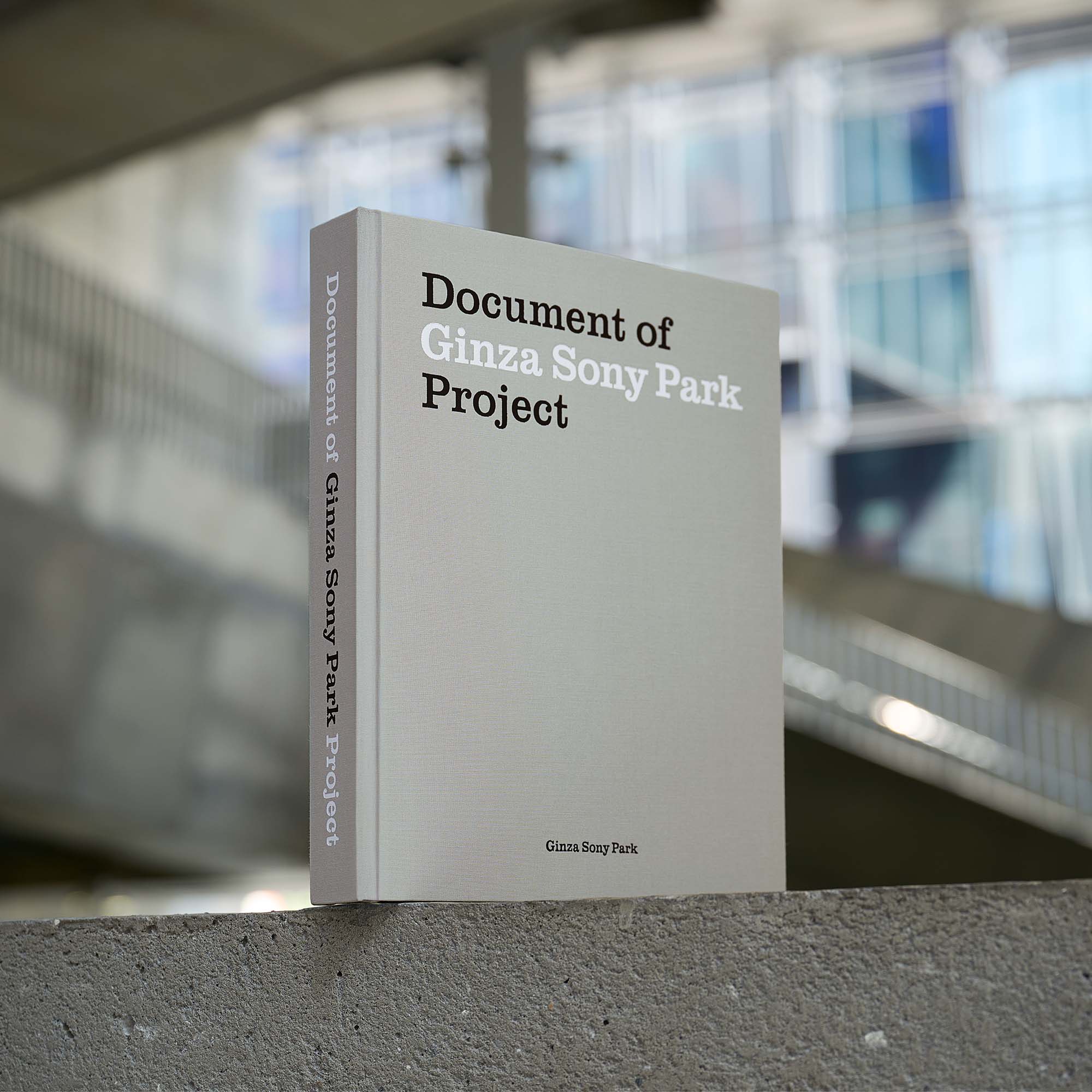
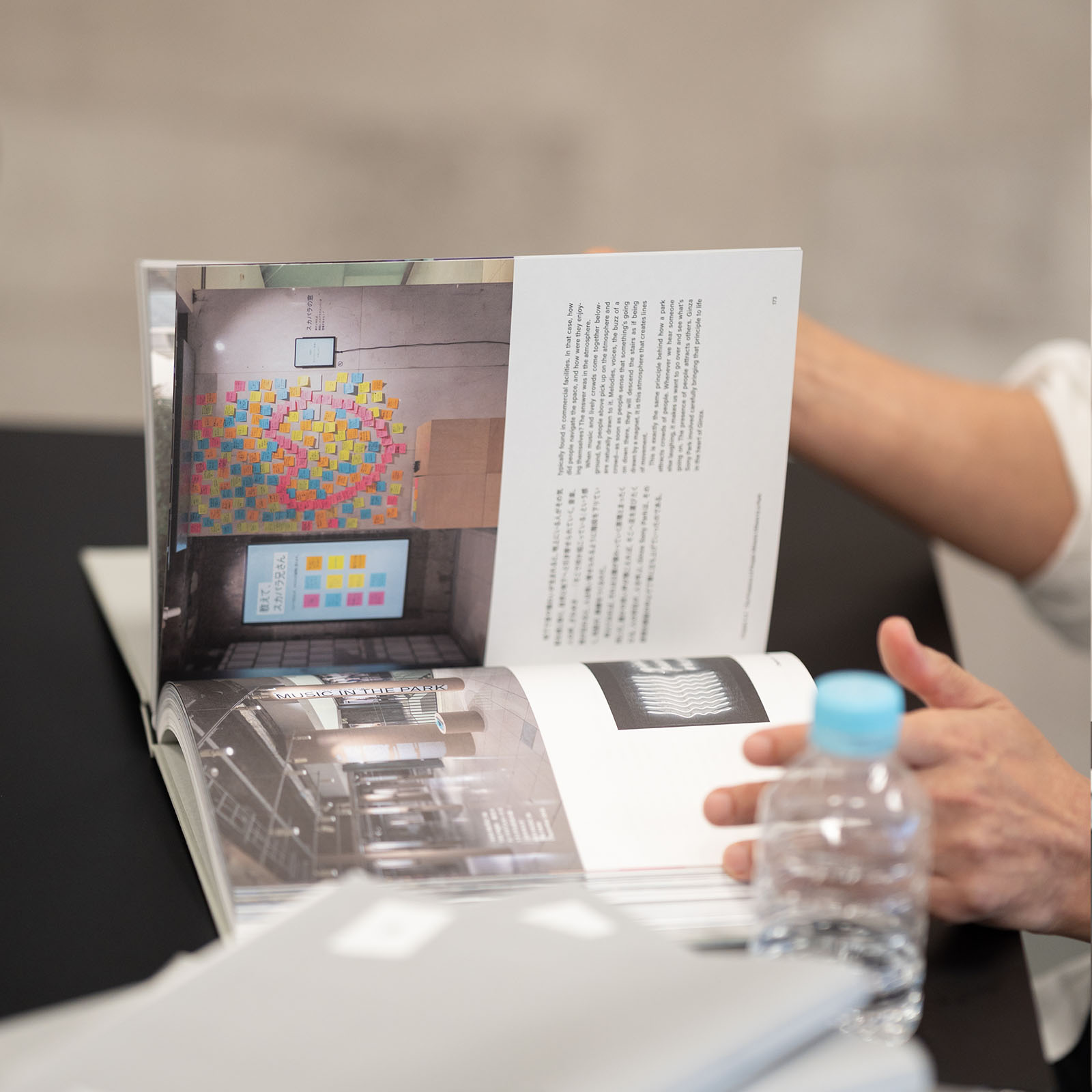
Spanning 400 pages, Document of Ginza Sony Park Project is a comprehensive record of the project that stands on its own like a work of architecture. How were the approximately 12 years of thinking and efforts leading up to the grand opening of Ginza Sony Park brought together in a single volume?

Three people who worked on the book from different perspectives-planning, editing, and design-look back on the production process and discuss what it revealed about the character of Ginza Sony Park: Daisuke Nagano, leader of the Ginza Sony Park Project; Soken Ito, an editor and planner who has worked alongside the project for many years; and graphic designer Yoshiaki Irobe, who also designed the venue for the "Sony Park Exhibition."
Three Steps Forward, Two Steps Back

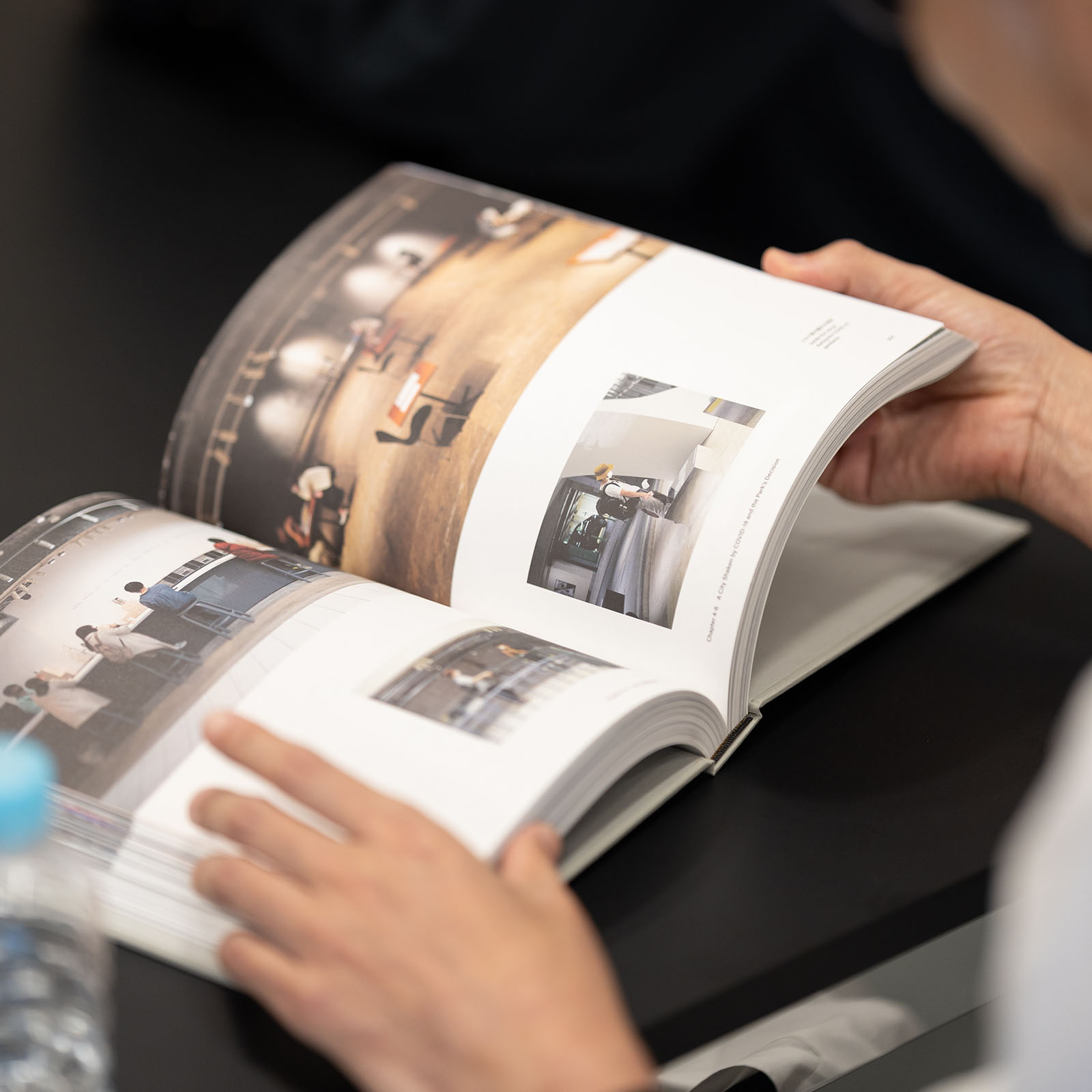
Close-up of a person in the foreground flipping through an open copy of Document of Ginza Sony Park Project. The left page shows alongside a small black-and-white photo of an exhibit featuring the words "MUSIC IN THE PARK" and a wall covered in colorful sticky notes. The right page displays English and Japanese text alongside small black-and-white photos.

Nagano: It's thanks to the tremendous efforts of both you and so many others that we were able to give form to the project's 12-year journey. Even the weight of the book when I hold it feels very "Ginza Sony Park" to me.

Ito: Even its appearance feels very "Ginza Sony Park."

Irobe: Not to toot my own horn, but I'm a big fan of it myself.

Ito: You were saying "We need to document this project" from when I first met you in 2017, Mr. Nagano.

Nagano: Yes. That was something I was thinking ever since the Sony Building rebuilding project (Ginza Sony Park Project) started in 2013. We were rebuilding the iconic Sony Building, and so I felt I had a responsibility to explain why we were rebuilding it. At the time, I didn't have the concrete idea to turn it into a book, but I shared those thoughts with Soken, and he began partnering with us on this project in 2017.

Ito: I took part in all kinds of meetings, from design to activity planning. It was right after the grand opening when we decided to turn the project's documentation into a book.

Nagano: Before we even started making the book, the journalist Yoko Kawashima actually reached out, saying she was interested in the project. Our nearly two-year dialogue with her helped link our fragmented memories together. I think that process almost acted like a kind of training, and it really paid off when it came time to make the book.

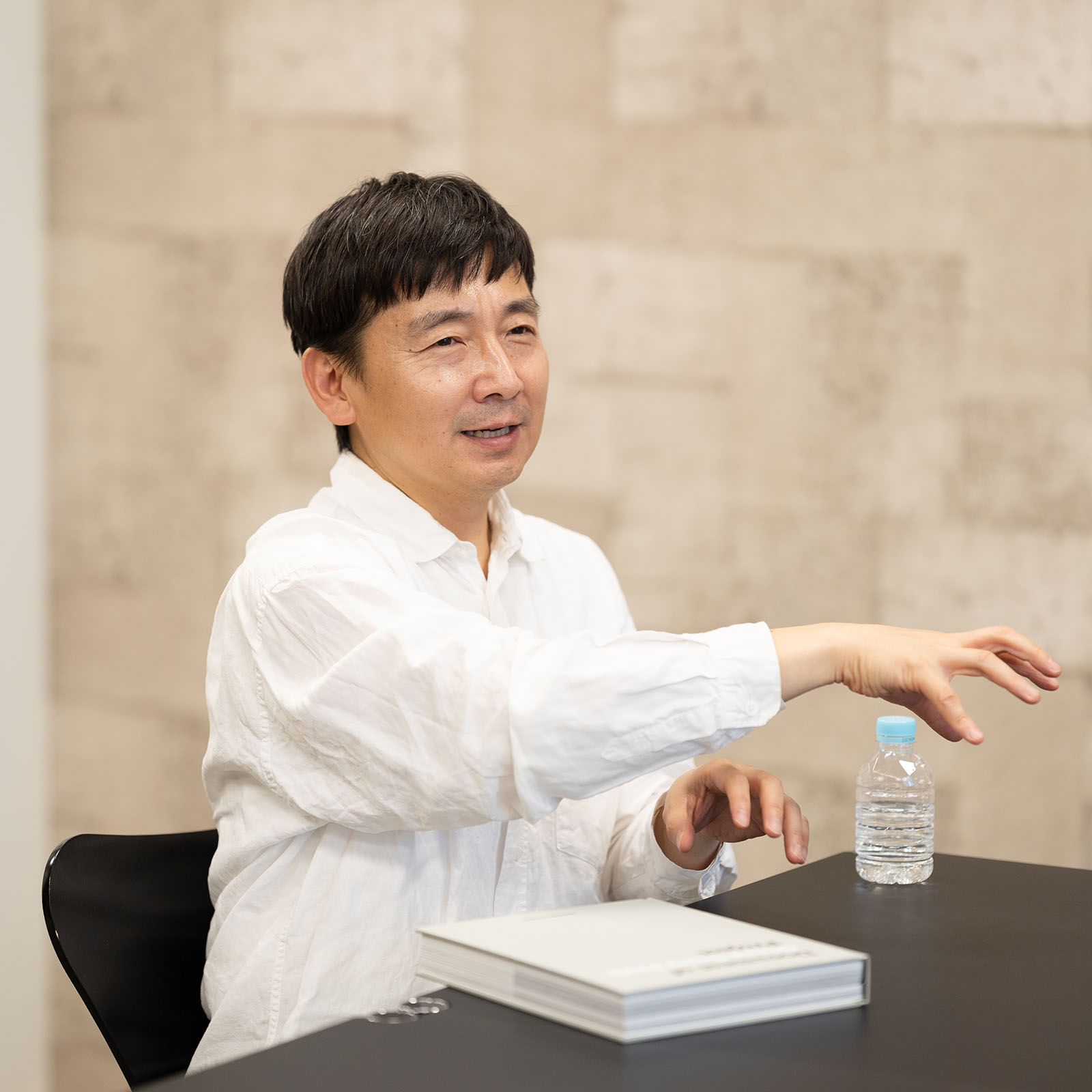
Soken Ito, wearing a white shirt, speaks passionately beside a copy of Document of Ginza Sony Park Project, which has a white cover and is lying on the table. He extends his right hand forward as he gestures.
Soken Ito / Editor & Planner

Ito: Throughout my time on the project, I was very aware of Ginza Sony Park's location in the Sukiyabashi Crossing-an absolute prime spot in the city. Given the significance of the location, I felt any effort to document it needed an outside perspective as well. And so in making the book, we brought on MUESUM, an editorial firm led by Tomomi Tada.
I thought I understood the background well enough, but Mr. Nagano and the rest of the Ginza Sony Park team really uncovered every last bit of material-including archives from the Sony Building era-and set up opportunities to interview stakeholders all over again. We could have edited this into a lighter volume, but I think what the team was really pursuing was depth. The book's 400-page heft is the result of that effort.

Nagano: Just documenting the chronological progress of the project wasn't enough. We wanted to create a book that conveys the underlying thoughts and process behind the various decisions we made.

Ito: Even in your position as representative director, Mr. Nagano, you debated the chapter structure and overall flow with the editing team down to the last detail, and reviewed every word of the manuscript. I don't think there's another corporate leader who would invest this much time and effort into working alongside the team. But then I realized: "Come to think of it, this is just how he's always been-whether it's building design or activity planning."

Nagano: Even during the project itself, I was attending meetings I didn't technically need to be at, checking everything from the drawings down to the details on-site (laughs).

Ito: And you never just pushed ahead saying, "We don't have time." You always paused to talk things through, making sure everyone was on the same page before taking the next step.

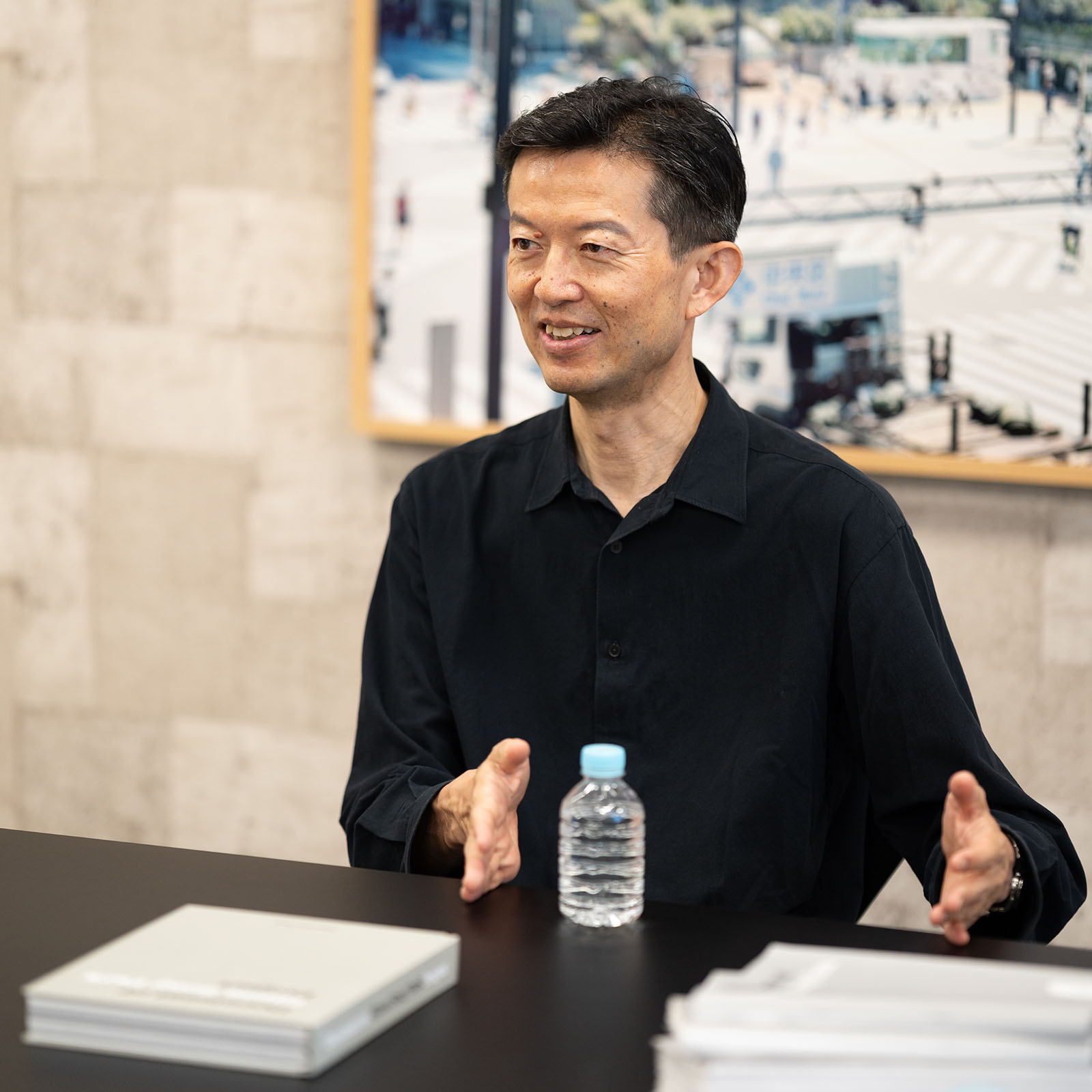
Daisuke Nagano, wearing a black shirt, speaks to the other participants across the table with a smile, holding both hands out. A photo of the Ginza cityscape hangs in the background, and a book and water bottles are on the table.
Daisuke Nagano / Leader, Ginza Sony Park Project | President & Representative Director, Sony Enterprise Co., Ltd.

Nagano: It always felt like taking three steps forward and two steps back. With this book, I also felt it was my duty to pass down the philosophy of Akio Morita, Sony's co-founder, and Yoshinobu Ashihara, the Sony Building's architect, to the next generation. Even during the project itself, I was constantly looking back to ensure that our current efforts aligned with their original vision. That iterative cycle-constantly reevaluating before deciding on our next move-was exactly the same when putting this book together.

Ito: The book Document of Ginza Sony Park Project looks back on the project chronologically. But looking at it now, you notice that while of course time was passing at a steady pace, the page count varies significantly depending on the period. We had a lot of back-and-forth about the chapter breakdown, but what ultimately dictated these differences?

Nagano: The longer chapters include behind-the-scenes stories we haven't shared publicly before. While many people have experienced the building and its activities firsthand, very few know the underlying philosophy and decision-making processes that shaped them. That's exactly why I felt we needed to document this and pass it on to the next generation.

Ito: What does that philosophy mean to you, Mr. Nagano?

Nagano: It's the most important thing-the unwavering core that guides us as we move the project forward. If we're going to transform the Sony Building into Ginza Sony Park, that philosophy has to be our anchor. In fact, you could say it's the only real anchor we have.

See here for Part 2

Profile

Soken Ito / Editor & Planner
Born in Fukuoka Prefecture in 1974. Works across a wide range of fields, from ad campaign production to corporate branding, planning and editing for magazines and books, and video and web production. Joined the Ginza Sony Park Project in 2013. Handled planning and editing for this book.
Yoshiaki Irobe / Art Director & Designer
Born in Chiba Prefecture in 1974. Heads the Irobe Design Institute at Nippon Design Center, Inc. With a primary focus on graphic design, he works in a range of design disciplines, spanning 2D, 3D, and spatial environments. Handled art direction for the "Sony Park Exhibition" in 2021. Worked on book design for this publication.
Daisuke Nagano / Leader, Ginza Sony Park Project | President & Representative Director, Sony Enterprise Co., Ltd.
Joined Sony Corporation in 1992. After gaining experience across sales, marketing, corporate strategy, and the CEO Office, he began leading the Ginza Sony Park Project in 2013. Assumed his current position in 2017 and oversaw the grand opening of the current Ginza Sony Park in 2025.